A tick bite? What diseases can you get from it all?
Ticks are small, spider-like parasites that suck blood from humans and animals. When they bite, ticks can transmit a variety of diseases that can pose serious health risks. Below we discuss the major tick-borne diseases, including prevention and treatment methods.
Lyme disease: a common threat
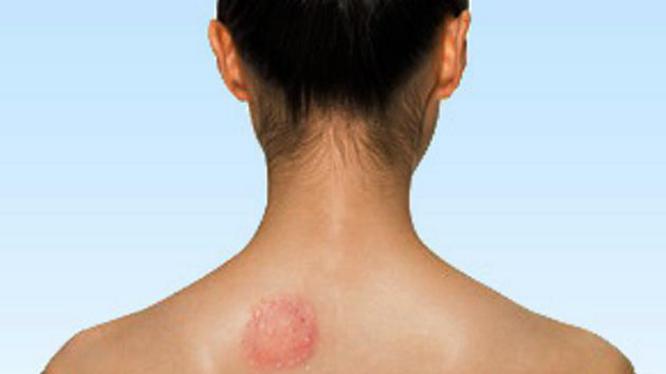
If a tick is infected with the Borrelia bacteria, you can contract Lyme disease. This disease manifests itself worldwide and can cause symptoms such as a red, ring-shaped rash and a flu-like feeling. Without timely treatment, patients can develop pain in arms or legs weeks to months after the bite, and the disease can eventually become chronic with complications such as chronic skin problems, severe walking and orientation problems and joint pain.
Other Diseases Transmitted by Ticks
- Alpha Gall Syndrome: Recently identified in the Netherlands. This tick bite causes a life-threatening meat allergy, which can lead to a delayed allergic reaction to red meat, often characterized by symptoms such as itching, hives, respiratory and gastrointestinal symptoms, and in severe cases, anaphylactic shock.
- Tick-borne encephalitis: This form of encephalitis occurs in certain parts of Europe and Siberia. There is a vaccination that is effective even up to four days after a tick bite.
- Babesiosis: Caused by parasites that infect red blood cells, this disease leads to malaria-like symptoms and severe anemia. Infections are often related to ticks that reside in the burrows of rodents.
Prevention and Actions after a Tick Bite
It is crucial to remove ticks as soon as possible to minimize disease transmission. Use tick tweezers or pen to grasp the tick close to the skin and slowly pull it out without twisting. Disinfect the bite site thoroughly and monitor any symptoms such as red spots or fever.
Diagnostics and Treatment after a Tick Bite
After a tick bite, it may make sense to have the tick examined. At Bloodtesting.nl you can go for tests such as Borrelia IgG and IgM antibody test and PCR examination of the tick itself. These tests can help diagnose an infection and determine the right treatment strategy.
Important Information About Ticks
There are about 700 hard and 200 soft tick species worldwide. In the Netherlands, the sheep tick, hedgehog tick and fox tick are mainly found. These ticks can transmit various diseases and require different approaches for prevention and treatment.
The tick's life cycle includes several stages in which they need blood to survive. It is important to be wary when doing activities in nature, especially in areas where ticks are common.
for those who want to know more:
Lyme disease is found all over the world. If you are bitten by a tick carrying the Borrelia bacterium, you will contract Lyme disease. Lyme disease can cause a red, ring-shaped rash.
Overview of other diseases a tick can transmit.
- Alpha bile syndrome has recently been identified in the Netherlands. In this, the tick bite causes a life-threatening meat allergy. A tick bite can cause a delayed allergic reaction to red meat. Some people bitten by a tick wake up three to six hours after eating red meat with hives or a very severe allergic reaction.
The characteristics of an alpha-gal syndrome are- itching
- urticaria (hives)
- respiratory symptoms
- gastrointestinal symptoms
- anaphylactic shock
- The allergy is caused by the sheep tick. Symptoms usually occur 2-6 hours after eating mammalian meat.
- Tick-borne encephalitis is a form of encephalitis. This disease is transmitted by ticks that are mainly found in southern Germany, northeastern France, Austria, Switzerland and some areas in Scandinavia, parts of Eastern Europe and Siberia. A vaccination is available that, in adults, can also be administered within four days of a tick bite. Once you have had this disease, you are immune to it.
- Abesiosis is a tick-borne parasite that destroys red blood cells, which provide oxygen transport. It causes Malaria-like symptoms and a severe form of anemia, which results from the breakdown of red blood cells.
- Babesia Microti infection is a disease transmitted through the tick that resides mainly in the burrows of rodents and rarely bites people. You can also get it through a blood transfusion. Infections related to blood transfusion are almost always caused by Babesia microti.
- Babesia Divergensis. An infection with Basesi divergens usually proceeds acutely and severely. Hemoglobin is first found in the urine (dark urine), followed by jaundice. In the most serious cases, a shock occurs, with kidney failure and severe inflammatory reactions in the lungs, you get shortness of breath and severe breathing difficulties, your lips and nails can turn bluish. In the Netherlands this infection occurs rarely. In the United States, particularly on the East Coast, it is diagnosed with some regularity. It occurs mainly in people without a spleen. Lyme disease is often diagnosed as well, because both microorganisms are often found in the same tick.
- Tick-bite feveris caused by the dog tick and occurs mainly in the countries around the Mediterranean Sea. The pathogen of this "tick-bite fever" is Rickettsia conorii, a bacterium that, like viruses, lives inside cells. The infection is often accompanied by headaches, aching muscles and joints and a drop in blood pressure. Sometimes there are also abnormalities in the nervous system and the kidneys do not work properly. Just under a week after infection, chills and fever occur, which can last up to two weeks. This disease can be treated well with antibiotics. In the Netherlands, this Rickettsia bacteria is not a pathogen. However, its sister Rickettsia Helvetica is regularly found in ticks.
- Rocky Mountain spotted fever, this severe tick fever is caused by the bacterium Rickettsia Rickettsii and occurs mostly in humans in the United States.
What ticks are there?
There are approximately 700 hard and 200 soft tick species worldwide. Of the twelve genera of hard ticks, three occur in the Netherlands. The sheep tick, the hedgehog tick and the fox tick.
- The sheep tick
The sheep tick, common tick or wood tick is the most common tick in the Netherlands. In the Netherlands the Borrelia bacteria, which can cause Lyme disease, is mainly transmitted by the sheep tick. This tick belongs to the so-called 'hard' ticks, recognisable by a shield over its abdomen. The sheep tick can live up to 3 to 4 years, depending on the climate. It has recently become known that this tick can also cause meat allergy.
- The Hedgehog Tick
Other Dutch species are the hedgehog tick in hedgehogs, badgers and other marten-like animals, and also in dogs and cats;
- The Fox Bug
The fox tick, which occurs besides foxes also in badgers and dogs;
- The Deer Tick
The Deer Tick is responsible for spreading Babesia. These microorganisms are parasites that invade red blood cells. The Deer tick is the most common transmitter of Babesiosis.
- The Dog Tick
This is the cause of Speckled Fever, which occurs mainly around the Mediterranean Sea.
- The Lonestar tick
Occurs in America, recognizable by the cross on its back. Was until recently the only tick to spread the dangerous flesh allergy, but recently it appears that it can also be transmitted by the sheep tick.
The drawing cycle
Ticks feed on the blood of mammals, birds and reptiles, called hosts. Adult ticks usually mate on the host. After mating, the female tick sucks herself full of blood and her body swells visibly. When she is full of blood she lets herself fall to the ground. The female needs the blood for the development of the eggs.
When the eggs are ripe, the female lays them on the ground, after which she dies. She lays 1000 to 2000 eggs. The eggs are laid in the autumn. In the egg stage the tick does not feed.
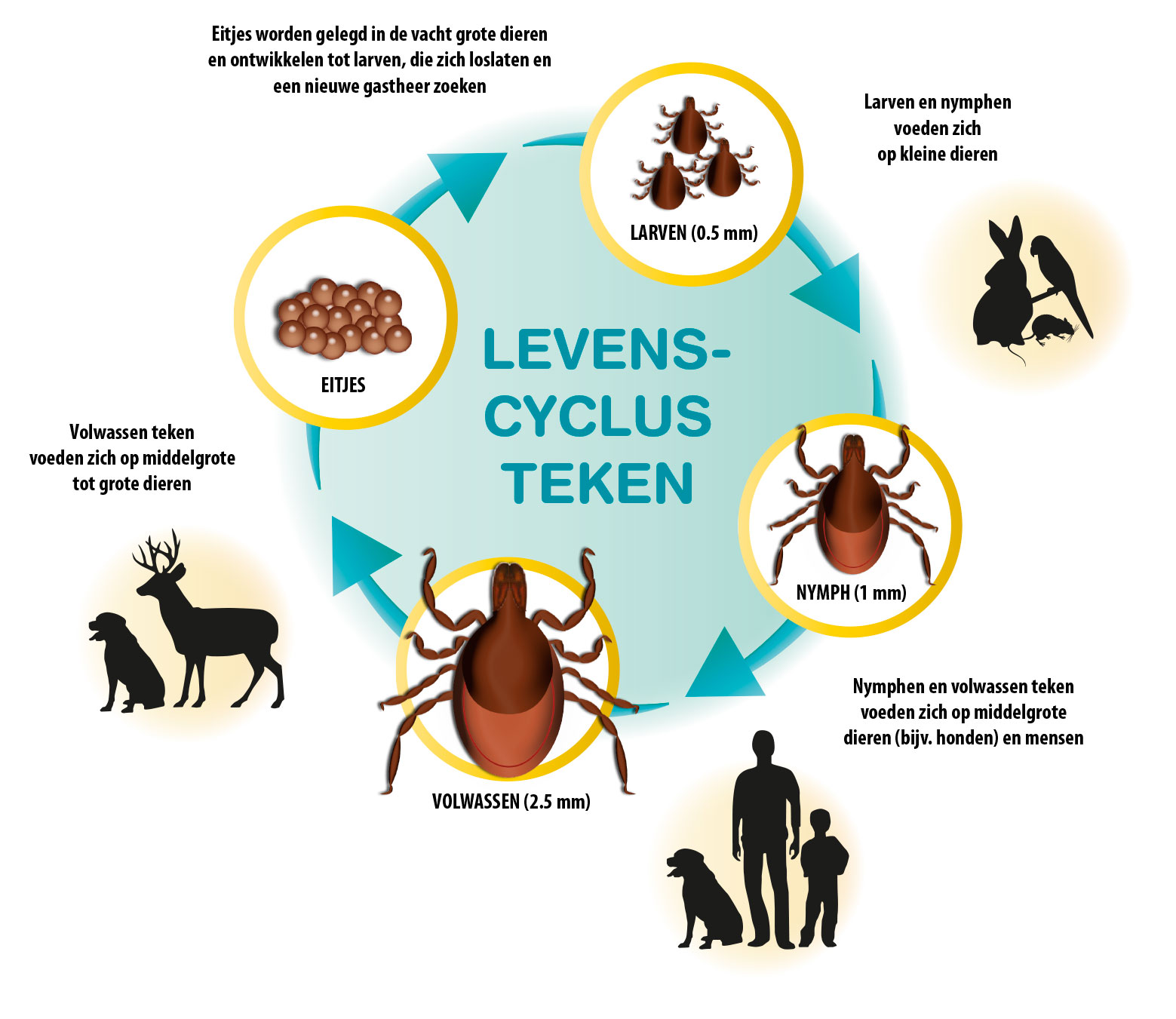
In the following spring, the larvae hatch and feed on small rodents (mice) and birds. At the end of the summer, the larvae moult into nymphs, which go into hibernation. In the following year, the nymphs feed on a wide variety of mammals and birds.
At the end of the summer, the nymph grows into an adult tick (male or female). The adult ticks will look for a host in the next spring, usually a large grazer such as roe, deer or wild boar, but sheep, cattle and horses can also serve as a food source.
What to do in case of a tick bite?
If you get bitten by a tick, remove the animal as quickly as possible with tweezers or a special tick pen. Grip the tick gently with the tweezers without squeezing it. Do not anaesthetise the tick! If you numb the animal, its muscles weaken and its saliva can run into the wound, and it is in the saliva that the pathogens are found. Place the tweezers carefully on the tick and as close to the skin as possible. Then pull it out of the skin with a light rotating movement. Make sure that you remove the entire tick. Disinfect the wound with iodine or alcohol. Pay close attention to the following days and note the date of the tick bite. If that spot appears within two weeks, you should still go to the doctor.
You can also send in the tick for further examination. Do not treat the tick with alcohol, but send it straight to our lab for a thorough analysis.
What tests are available after a tick bite?
| Borrelia IgG (blot) antibodies chronic lyme | blood test | € 75 | ||
| PCR examination Tick itself | blood test | € 139 | ||
| Borrelia IgG and IgM antibodies | blood test | € 69 | ||
| Meat allergy alpha bile | blood test | € 39 |
- The IgM Lyme serology can be false positive, especially in autoimmune diseases, primary EBV (Pfeiffer's disease) and primary CMV.
- The IgG Lyme serology can be false positive, especially in syphilis.
Therapists would like to see what can be seen in the lymphocytes when chronic Lyme infection is suspected and use these tests to do so:
https://www.bloodtesting.nl/cd4cd8-ratio.html
https://www.bloodtesting.nl/cd57-natural-killer-cells-chronische-ziekte-van-ly.html
Submit the tick that bit you:
Don't let it get that far, if you still have your tick you can also have the tick itself examined. If this tick is infected with Lyme disease in its DNA, there is a good chance that it transmitted the disease to you through its bite and you can start the appropriate treatment.
If the tick itself is not infected with lyme you can rest assured. Then it is not carrying lyme and could not transmit the disease through the bite either.
Keep the tick and put it in the tube that will be sent to you after you have ordered. At the laboratory the DNA traces in the tick will be analyzed, you will receive the result with the answer if the tick had lyme or not.
What complaints can you get?
Many Lyme symptoms are general complaints which also occur with other diseases. The complaints also differ per person. Possible complaints are:
- Rash or other skin abnormalities at the site of the tick bite-
Skin rash in other areas-
Hair loss-
Unexplained temperature rise, fever-
Unexplained chills-
Unexplained perspiration, night sweats-
Severe fatigue-
Frequent infections (cavities, respiratory infections)
- Glandular swelling (neck, armpits, groin)
- Sore throat-
Shortness of breath, coughing-
Increased intolerance to alcohol, hangover-
Stomach upset, abdominal pain-
Loss of appetite-
Altered bowel movements (constipation, diarrhea)
- Unexplained weight change > 3 kg-
Palpitations, skipping heart-
Pain in chest, ribs-
Pain or swelling in joints-
Pain inmuscles and tendons-
Stiffness in neck, cracking of neck-
Stiffness of joints and/or back-
Headache-
Tingling, numbness, localized burning or stabbing pain-
Muscle twitching in face or elsewhere-
Muscle cramps, restless legs-
Unexplained twitching or jerking-
Semi-lateral facial paralysis-
Swelling around the eyes-
Double vision, tunnel vision, difficulty seeing sharply-
Hypersensitivity to light-
Pain or itching in ears-
Ear buzzing or whistling-
Hypersensitivity to sounds-
Dizziness, balance disorder, increased motion sickness-
Lightheadedness, difficulty standing/walking-
Mood swings, irritability, outbursts of anger-
Gloom and/or anxiety, brooding-
Problems sleeping (too little, too much), waking up tired-
Confusion, difficulty holding a train of thought-
Difficulty concentrating, understanding new information, reading comprehension-
Forgetfulness, poor short term memory-
Orientation problems (getting lost, losing things)
- Problems with speaking (finding words, saying wrong words, stuttering, poor articulation)
- Irritated bladder, unable to hold urine or having difficulty urinating.
- Sexual dysfunction, decreased desire for sex-
Pain in the lower abdomen-
Men only: Pain in the testicles-
Women only: Milk discharge from the chest-
Women only: Unexplained irregular menstruation
Frequently Asked Questions:Do you sense a tick bite?No. The tick's saliva contains numbing and immune-suppressing substances that prevent you from feeling the bite. How long is a tick attached to you?Usually a few days. That's how long it takes a tick to "eat". Do you need to see a doctor after every tick bite?No. The chance that you will get lyme and you did not have a red ring is very small. The official advice is therefore to only go to the doctor if you get fever, muscle or joint pain in the weeks after the bite. Incidentally, family doctors can now give preventive antibiotics for one day to people who have been bitten by a tick but who do not have a red ring. The bite can be no more than three days ago. With a red ring, do you always need antibiotics?Yes. The earlier Lyme disease is noticed, the better the treatment. In a red ring you take antibiotics for ten to fourteen days. In a later stage it is three to four weeks. The family doctor makes the diagnosis of the erythema migrans and can refer you, depending on the symptoms, to a dermatologist, rheumatologist, neurologist or a specialist in infectious diseases. Do you always get Lyme disease after a tick bite?Lyme disease is an infectious disease caused by the borrelia bacteria. Not all ticks carry this bacterium. And not everyone who is infected with these bacteria will get the disease. Our own immune system can fight the infection itself. This does not mean that a previous infection offers protection against a new one. Unfortunately you do not build up permanent resistance. What features indicate Lyme disease?A red ring or spot-like rash is the most common and prominent sign of Lyme disease. That spot, also called erythema migrans, usually appears after a few days or weeks, but sometimes only after a few months. Other symptoms are much more vague, which is why the infection is often not noticed until late. Itching is usually not a symptom. How many people continue to suffer from symptoms?When the red ring is treated with antibiotics, almost all patients recover. Between 4 and 10 percent of all lymphoma patients have long-term symptoms, even after treatment. Why some people have symptoms and others do not is currently being investigated. |